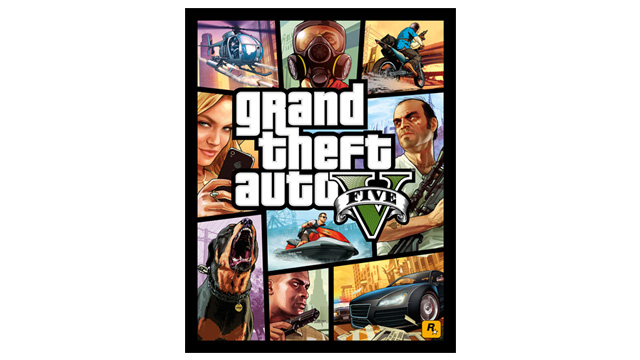
If you are looking for free roam games, Games Like GTA are the first place to start. The much heralded Grand Theft Auto series set a clear benchmark in video gaming history as the first massively popular 3D open world action adventure game. It quite literally revolutionized the industry. The thrill of interacting in a vibrant world where personal choice is paramount, broke down the traditional linear boundaries games were thought to inhabit.
Today we have a multitude of games similar to GTA, all trying to catch some of the same magic. Many try, only some succeed. Only some games are actually executed properly and can compare to GTA. If you can’t get enough of the GTA series, this article will suggest some other games that will provide a similar gaming experience.
The SlateBook x2, Hewlett-Packard's foray into the Android convertible market, is now available on the company's sales site.
The tablet-laptop hybrid was slated to be available in August but has arrived early on HP's U.S. sales site. HP also launched the SlateBook in Japan on Monday.
Disney animation never skimps on the expressive nature of characters' eyes (think Bambi's big browns), so why shouldn't animatronic action figures get the same treatment?
(Reuters) - Activision Blizzard Inc's CEO, who is shelling out $50 million of his own money in an $8.2 billion deal to buy back most of Vivendi's stake, said the world's largest video game publisher will be freer to pursue acquisitions and grow after emerging from its French parent's wing.
(Reuters) - Japan's Toshiba Corp said on Friday it aims to cut a combined 10 billion yen ($100 million) in costs in its television and PC businesses in the year to March 2014 and double that figure in the following year to cope with persistently weak demand.
This 35-year-old male appears to have a legitimate ID, but his visitor history is rather suspect. (Credit: Intellicheck Mobilisa)
Kids these days. It just keeps getting harder for them to misbehave without being spotted.
A new iPhone app released in July aims to help stop underage drinking by making it easier for bartenders and bouncers to spot fake IDs. Users with the barZapp app simply point their iPhone cameras at the bar code on an ID to find out where it's legit. The app also offer up a lot of additional info, including the owner's date of birth, height, weight, and eye and hair color as well as the card's expiration date. They can even see the visitor's history at that exact location.
Available on iTunes for $1.99 (which allows for 10 scans a day) or $19.95 a month (which gets you unlimited scanning), barZapp has been downloaded roughly 1,000 times.
Intellicheck Mobilisa, the company behind the app, also provides software for many of the ID scanners stores currently use, scanners that CEO Nelson Ludlow recently told U.S. News & World Report are far more expensive given they require that stores purchase and maintain stationary hardware. Ludlow adds that his company boasts the largest state ID repository in the U.S., and that if you see a license scanner in a store in this country, "It's extremely likely that [it has our] software inside."
Even though barZapp isn't the first on the scene, Ludlow claims that barZapp is superior to its competition because of its ability to scan licenses from every U.S. state as well as the Canadian provinces. In fact, the company was sued in 2009 for attempting to monopolize the driver's license validation market.
Because the app can spot fakes regardless of what the license holder is attempting to get or do, tobacco store owners may find barZapp useful as well. "This low-cost solution can not only help to deter underage drinking, but also help protect alcoholic beverage and tobacco product providers from costly fines and potential loss of license from serving underage patrons," Ludlow said in a press release.
The app, which the company says will be available for Android soon, looks for several types of fake IDs, from those whose non-encrypted info has been tampered with to altered bar codes to expired hand-me-downs. "If someone fiddles with a date or something in the bar code ... you better do it exactly the right way" or get caught, Ludlow adds.
A pair of US hackers sponsored by the Pentagon’s research facility Darpa, have demonstrated their ability to hack the computers in cars, remotely controlling the acceleration, braking and steering inside a Ford Escape and Toyota Prius.
3D printers can be harmful to humans if they are not set up in the right environment, researchers at the Illinois Institute of Technology have warned.
3D printing is a process of melting plastic filament and creating solid objects by building them up in very thin
South Korean technology giant Samsung is to invest $1bn (£650m) in developing new products it hopes will compensate for stalling smartphone growth.
Investing heavily in its memory-chip and display businesses will help Samsung to offset slowing growth in the $358bn mobile phone market, the company hopes. Net income between April and June fell short of analyst projections despite a 50 pc rise to 7.58 trillion won, excluding minority interest. Analysts forecast an average net income of 8.02 trillion won, according to Bloomberg.
Activision Blizzard, the video games publisher responsible for Call of Duty and World of Warcraft, has announced a deal to buy back most of its shares from French media giant Vivendi.
Activision will acquire 429 million shares for approximately £3.79 billion in cash, or £8.83 per share. Meanwhile, an investment vehicle formed by Activision CEO Bobby Kotick and Co-Chairman Brian Kelly
Imagine if you could see what an artwork would look like on your wall before you bought it. And imagine if that artwork only cost $250, and was purchasable with a tap and swipe of your iPad.
The UK's regulator for television on-demand, ATVOD, says it is trying to get industry support to block the flow of money to some pornographic websites in the United States, including sites like PornHub.
Websites that offer hardcore pornographic content freely, without proper age-verification, are in violation of the Obscene Publications Act, says ATVOD, and are therefore operating illegally.
The animal kingdom can be an aggressive place when it comes to reproduction, with alpha males killing off their counterparts to ensure their genetic line persists. Invertebrates, however, present some pretty extreme competition in the stakes for the most bizzare, rapacious or unusual sexual practices.
Online and offline retail experiences are colliding, and those operating in the offline world need adapt creatively using mobile payment methods, says John Lunn, Global Director for PayPal Developer, speaking at Wired Money.
With 40 percent of people walking into a store admitting they have no intention of buying anything in that store, retailers need to find a reason to attract consumers other than by providing customer service or the opportunity to buy something immediately. Even that, Lunn says, is becoming increasingly unnecessary, pointing to Ebay as an example of being able to order an item online and then pick it up in store. "I've seen some stores recently where they don't even have any stock" John Lunn, Paypal
Samsung and Apple gained market share in global mobile phone shipments while No. 2 Nokia faded.
(Credit: CNET)
Samsung expanded its lead in the global mobile phone market during the second quarter of 2013, accounting for nearly 28 percent of all mobile phones shipped, according to new data released Thursday.
The South Korean electronics shipped 107 million handsets in a quarter that saw the sector's fastest expansion in a year, growing 4 percent annually to reach 386 million units, according to figures released Thursday by market researcher Strategy Analytics. Much of that growth was fueled
Rockets have been central to the space program since their inception, but they’re far from the only theoretical way to launch material into space. Since the 1950s, the government has experimented with various alternative launch concepts, from the space gun tests of the 1960s to proposed launch loops and space elevators. Most of these ideas have been shelved due to technical difficulty or for political reasons but one science team is hoping Kickstarter will deliver what government institutions haven’t
Play over the internet (or LAN) with up to 500 other people or create your own scripted game modes.
Grand Theft Auto: San Andreas is an open world action-adventure video game developed by games developer Rockstar North in the United Kingdom and published by Rockstar Games.
It is the third game in the Grand Theft Auto video game franchise, the fifth original console release and eighth game overall.
CVG have managed to get an extremely rare audio interview with. Below is a quick summary of interesting points from the gameplay, but you can listen to the whole thing by playing the YouTube video.
-Custom cars that you can no longer drive (for example if its tyres have been shot out) will no longer disappear - instead they will be taken to an impound lot. You can pay a fine to retrieve your vehicle..
IT IS every school student's dream - a pen smart enough to tell you when you've made a spelling mistake.
Two German developers, Falk Wolsky and Daniel Kaesmacher, have created the Lernstift (which means learning pen in German) that vibrates when you spell a word incorrectly as you write it.
The creators described the pen as having the technology equivalent to a smartphone inside of it, and analyses the way people write each work using a gyroscope and an accelerometer that combine to track the movement of the pen's nib.
APPLE'S developer centre has been hacked, the tech giant has confirmed.
The company's developer network - the place where apps are created - has been down for more than three days, without explanation.
However, this morning Apple sent an email to developers explaining that it had detected a breach on its servers on Thursday.
Apple told news.com.au that developer's information is encrypted, however says hackers may have accessed developer's names, email and physical addresses.
The hack only affected developer accounts. Customer credit card information and iTunes accounts were not compromised, Apple says.
It says it waited three days to alert people about the hack in order to figure out exactly what data was exposed.
Another day, another rumor about Apple's plans to launch a "lite" version of its iPhone.
A report out of China and discovered by Phone Arena on Friday claims Apple could be planning to launch two versions of an "iPhone Lite." That report, which included images claiming to show Apple's plans, indicates that one of the handsets is codenamed "iPhone Zenvo," while the other comes with the name, "iPhone Zagato/Bertone."
Both devices, according to the leaked documents, will come with 4-inch displays and come in different colors. However, the Zenvo model will come with a dual-core processor from Samsung and 1GB of RAM. The Zagato/Bertone version will have an unidentified "H6P" processor and support for TDD-LTE.
PlayStation 4 is headed for a 'Holiday 2013' release date
Sony says the PS4 was designed with an overarching theme of a "frictionless and seamless" gaming experience.
We've known that the PS4 will track both the controller in a gamer's hand, as well as their face, since the console's launch in Feb. But during his GDC talk Norden revealed some interesting ways that this technology will be implemented in games.
PlayStation 4 review
Hands on: PlayStation 4 review
We get our hands on Sony's new console and deliver an early verdict
For example, the old multiplayer split screen, divvying up television real estate when two or more players go at it, will be aided by this tracking tech. If a gamer gets up and moves right or left, his section of the screen will automatically be swapped.
microsoft taking the fight to apple in tablet wars
Thinking of buying an iPad? Well Microsoft wants you to see its new website first, which attempts to explain why you'd be much better off opting for a Windows 8 or Windows RT slate.
The new iPad vs Windows page, which went live this week, allows visitors to compare the Apple tablet's vital stats with a range of alternatives running Microsoft's touch-friendly operating system.
Natually, there's the Microsoft Surface RT, as well as devices from partners like the Asus VivoTab Smart, Dell XPS 10 and HP Envy x2.
The profiles place variables like battery life, weight, thinness, display size, connectivity, compatibility with printers and cloud storage side by side in the hope of convincing potential buyers that the grass is really greener on Microsoft's side.
Beyond those stats, the page also points out that only Windows slates run Microsoft Office, that the iPad cannot handle multiple accounts or displaying more than one app at a time. Windows RT, of course, gives both of these boxes a giant tick.
Lastly there's the price comparison, which also goes in favour of Microsoft-based offering.
Of course, the site doesn't mention that minor little thing called The App Store, and the barely insignificant hundreds of thousands of app discrepancy between it and the Windows Store.
The launch of the site follows a recently-outed TV commercial (see below), which makes fun of the iPad mini by attempting to highlight the things it can't do compared with Windows tablets.
The new campaign brings back memories of the old Mac Vs PC wars which attempted to place the plucky Apple underdog against the dominant Microsoft powerhouse. This time the boot is on the other foot, as Microsoft plays the little guy.
Take a look at the site for yourself. Would it make you think twice about buying an iPad in favour of a Windows-based machine or is Microsoft reaching here? Let us know in the comments below.
Casinos can make money because most patrons usually end up losing it. Flying a glider has a lot in common with going to a casino. You typically start out with a little boost, and sometimes, with favorable conditions, you can even increase your height. If you stay in the game long enough though, you will eventually lose all that you started with. Only the most skilled, and lucky, pilots can stay aloft as long as they desire, but even that is changing as we turn our technological sights towards perpetual flight.
A prime example: researchers at Lehigh University are attempting to build a pilot-less glider that would be capable of endless flight. Their aspirations hinge on the concept of “dynamic soaring,” which can be traced back to an 1883 Nature paper by polymath Lord Rayleigh (of why the sky is blue fame) entitled, “The Soaring of Birds.” The new meets the old in mankind’s long-standing quest to perpetually stay aloft.
Simply stated, dynamic soaring involves making use of non-uniform wind to gain lift or momentum. It sounds interesting, but that doesn’t actually tell us much about how to do it. One might expect that there is a good theory out there that tells us how to proceed — a “physics of soaring” if you will. The problem is, we don’t even have any such theory for sailing, and that’s only two dimensions. Most websites and popular textbook descriptions of sailing account for the ability to tack upwind by a nebulous appeal to largely ineffectual Bernoulli forces. These accounts then usually trail off into increasingly fractalized, and largely irrelevant, partial differential equations which serve only to obscure the lack of fundamental insight. How then are we to sufficiently understand complex 3D flow effects in the air?
In order for a perpetual glider to stay aloft by dynamic soaring, an on-board control would likely need to translate sensor data into flight adjustments according to some algorithm. Clues as to what form such an algorithm might take could perhaps be harvested by observing those aerial champions who make sustained-flap-free flight routine — the turkey vultures. Many large birds of prey, like hawks and eagles, can soar the odd thermal until their heart is content. Typically though, they choose to boost their flight with amply-powered wingbeats on a regular basis.
The reason that most birds that are well-equipped for soaring will still laboriously pound the wind, is that they usually have some place to go. That’s typically not the case for all large birds of prey though. In 2010, there were almost two million turkey vultures in the US. At four million square miles of US turf, that gives just two square miles per bird. In other words, these guys really have no place pressing to be. Instead, they need to be able to hang out efficiently just above the treetops to scan the highways for any opportunity in their competitive roadkill marketplace.
This situation, and a remarkable suite of flight adaptations, has led to an impressive flight culture where these turkey vultures closely monitor each other’s performance, gauging for the presence of thermals or signs that other invisible updrafts may be had. Their own personal body area network of feathered variometers and pressure sensors is therefore greatly enhanced by inadvertently sharing valuable flight data. If perpetual gliders are to remain aloft, access to a community of shared flight data — like that of turkey vultures — may be indispensable.
Geographical features like coastal cliffs are said to be prime places to capture unsteady air effects through dynamic soaring. Both the leeward and wayward sides of a mountain also have fairly predictable lift currents, the structure of which depends on the direction the wind. For much of the Earth however, conditions are less than ideal. If a glider finds itself losing altitude, a more artisanal approach to perpetual flight might be necessary. Turkey vultures appear to be able to infer and catch bursts of lift not only by watching the movements of clouds, but also by watching the motions of terrestrial objects — like trees.
To the unpurposed eye, the bounce of limbs or ripple of a flag may be largely devoid of meaning, but when they are the objects you are trying to avoid, they are much more interesting. The turkey vulture is also unique in that it can comfortably hold its wings in a shallow “V” dihedral for extended periods of time. While this gives a slightly smaller lift face, it allows the bird to capture every sidewind it feels within a moments notice, and convert them into speed and altitude gains at the expense of constant heading.
Years after the crazy idea was first mooted, researchers at the Bristol Robotics Laboratory in the UK have finally created what he calls the “world’s first” urine-powered fuel cell. The fuel cell, powered by your own urine or someone else’s, currently generates enough power to enable texting, web browsing, or a brief phone call (or, presumably, if you’ve drunk a lot of water, a not-so-brief call).
The technology at play here, developed by Ioannis Ieropoulos and friends, is called a stack or cascade of microbial fuel cells. As the name suggests, a microbial fuel cell (MFC) contains microbes that feed on organic matter and produce electricity in the process. From the research paper, it sounds like Bristol’s MFCs were simply filled with the same activated sludge that’s used at sewage and water processing plants. The researchers introduced tryptone and yeast to encourage the growth of the energy-producing microbes (in this case, probably Geobacter sulfurreducens), and then poured the sludge into some MFCs.
In a microbial fuel cell there is an anode compartment, a cathode compartment, and in the middle there’s a membrane that only allows protons to pass through. The microbes break down the fuel (the organic compounds in your urine, such as proteins and hormones) in the anode compartment, producing CO2, electrons, and protons. The electrons are ferried to the cathode compartment via an electrical circuit, where they combine with the protons to form hydrogen — and then combine with oxygen to produce clean water and electricity.
The amount of electricity that can be produced this way is fairly low (on the order of microwatts), and so the Bristol researchers stack eight MFCs together, with your urine cascading down the line. The best result, which produced “practically useful power outputs,” was achieved by running four MFCs in parallel (for more power), in serial with another another block of four MFCs (for more voltage). In total, this setup produced 642 mV, 312 µA, and 206 µW — not a whole lot, but apparently enough to “charge a Samsung mobile phone.”
The MFCs themselves are small (and created with a 3D printer, incidentally), but the entire setup is currently around the size of a car battery. Ieropoulos says he is trying to secure funding to create a smart toilet with partners in the US and South Africa. There aren’t many details, but presumably this smart toilet will be equipped with a USB socket so that you can recharge while you discharge. The eventual goal, though, is to produce something that can be carried around easily and fully charge a smartphone. Whether the underlying science of microbial fuel cells will allow this, though, remains to be seen. The only real way of increasing an MFC’s power output is to increase the protein content of your urine — and generally, if you have a lot of protein in your pee, your kidneys are failing.
Apple has a few tricks planned for 2013 to keep smartphone rival
Samsung and its increasingly popular Galaxy series from stealing all of
the spotlight this year. Along with updates to its popular tablet and
mini tablet series [iPad 5 and iPad Mini 2], Apple is expected to
release a brand new installment to its flagship smartphone family, the
iPhone 5S. Rumor has it, Apple is also planning to release a low cost
alternative to the current iPhone to edge out Android developers, like
Samsung, in low-end markets.
However, Pegatron CEO TH Tung confirmed to investors
releasing a less expensive than full-strength iPhone will not come
"cheap." Not much has been confirmed in terms of specs for the iPhone
Mini, or iPhone Nano, but here's what we believe:
- the low cost iPhone Mini/Nano will have a plastic case, available in several colors. - have a design reminiscent of the current iPhone. - come with a 4.8-inch screen
Without contract the iPhone Mini is expected to cost around ₦56,489.34-64,559.24, while the current iPhone 5 cost around ₦96,838.87.
"We think Apple will have to launch an 'iPhone Mini' at some point
over the next three years to address the hundreds of millions of prepaid
users worldwide that cannot afford the current iPhone," according to
Neil Mawston of Strategy Analytics.
The low cost iPhone Mini is expected to released along with the new
iPhone 5S sometime this year, either in Q3 or Q4. Most rumors point to a
September launch for all new Apple devices. Though a 2013 release is
most likely, Apple could easily push back to 2014 to make sure the
updates are worthwhile.
iPHONE 5S RELEASE DATE
Open a calendar to any autumn month, then throw a dart at it: whatever
date you hit, you've got as much chance of getting the official launch
date correct as some of the so called experts. For example, a recent
rumour suggested that the iPhone 5S would launch on 20th September.
This date was based on the fact that iOS 6 was released 100 days
after the OS was unveiled; add 100 days on to the iOS 7 reveal and you
get the 18th September. Given that new hardware arrives with a new
operating system, and Apple releases hardware on a Friday, that would
give us a 20th September launch. That's all well and good, but it's
important to remember that iOS 5 was announced on the 6th June 2011, but
it wasn't actually released until 12th October 2011. In other words,
Apple doesn't have a specific pattern and it will release products when
it's ready.
That doesn't mean that late September is out of the question, as an
autumn launch seems the most likely. This follows information hinted at
by Tim Cook in Apple's earnings call. In the call, Cook suggested that Apple won't launch new products until Autumn.
"Our teams are hard at work on some amazing new hardware, software,
and services that we can’t wait to introduce this fall and throughout
2014," said Cook.
While Cook may have said that there's nothing new until September, it
doesn't mean that it's necessarily Apple's choice, with rumours of
delays. We're not sure that Apple can afford a delay in its next product
and it's likely to do everything it can to meet earlier deadlines. A
recent report on The Wall Street Journal states that Foxconn is dramatically increasing staff in order to start work on the iPhone 5S
Let's face it: smartphone screens are getting a little boring. Apart from going closer to the edge of the bezel, it's all just increasingly larger displays in the same rectangular shape, with most attempts to deviate from this form factor failing.
But what if we didn't have to put up with that? What if a radical new way of looking at our smartphone could mean we completely change the way we use our smartphones and tablets? Flexible displays could do just that, and it's a technology that could be worth billions in just over half a decade.
The second you mention flexible displays, most people turn off. They don't see the point in being able to bend your phone - and if that was all that flexible displays allowed, they'd have a point.
But imagine if your smartphone could expand to tablet size, or you could wear a curved display on your wrist. Many people already know that flexible screens can be rolled or even folded, but more importantly they also offer much greater durability.
A study by warranty provider Square Trade suggested that iPhone and Android device owners in the UK spent £1.2 billion on repairs between 2007 and 2012, and the most common cause of damage was accidental drops. While traditional glass touchscreens shatter and scratch, flexible displays can survive similar falls unscathed.
The technology dates back to the 70s, when research company Xerox PARC produced the first flexible e-paper display. Billions of pounds have been sunk into the research and development of flexible displays since then, with limited results. Cambridge-based Plastic Logic showed off a concept newspaper that could be rolled up and put in a bag around seven years ago, but the technology has struggled to get off the ground.
At the same time Polymer Vision, a company spun out of the Philips R&D lab in Eindhoven, tried to release a folding e-ink display, but couldn't get to the economy of scale needed - plus, the company told us, it was hard to convince people that their new device wasn't horrendously brittle.
Thankfully in the last couple of years we've seen a flurry of prototypes heralding the arrival of this technology on the consumer electronics scene, meaning we could gett our hands on the new wave of devices in the not-too-distant future.
A recent report from Visiongain suggested "the global flexible display screens market will reach US$260.3 million" this year, but expects it to be the "benchmark technology for mobile devices" by 2018.
An IHS report from early June is also optimistic about the future of flexible displays suggesting that worldwide shipments will climb to "792 million units in 2020, up from 3.2 million in 2013", taking market revenue to around US$41.3 billion, although other reports are more circumspective, suggesting that the market will only be worth $3.2 billion by 2017.
Designing the future
The numbers are still very much up for debate, as we're not even at the product stage yet. However, prototypes for flexible devices already range wildly and the potential is exciting.
At the shallow end, there are displays that simply curve around the edge of a traditional rectangular smartphone, as shown by Samsung.
Manufacturers could design user interfaces to make use of these spaces as distinct touch control areas for navigation, or as secondary displays for specific information. Imagine a permanent battery meter and signal strength display, or a dedicated notifications area that provides at-a-glance information regardless of your activity or the app that you are in, without detracting from your normal smartphone use.
One could easily see a version of Android being brought out to cater for this, using the top, bottom or spine of the phone to deliver notifications.
As the technology improves, smartphone forms will become a great deal more imaginative. Freed from the restrictions of rigidity, we could see a real drive toward designs that fold up to be truly portable, but also allow us to expand our smartphones to large tablet size for watching video.
The trend toward larger displays and hybrid smartphone/tablet devices indicates clear demand in the market already.
Interact in a new way
We could also find new ways to interact. The Nokia Kinetic, on show at Nokia World 2011, allowed users to flex the device in order to control it. You could scroll by twisting, or answer the phone by giving it a squeeze.
It's clever ideas like this that will capture the imagination of the public when a manufacturer delivers the first truly malleable phone - not just the fact that you can wrap it around your finger.
A similar idea has obviously occurred to Apple, as you can see from this patent application which discusses a system to detect "force exerted on a flexible display". A touchscreen that could determine the force you apply and react accordingly would be a great deal more intuitive to use.
It could also have major implications for apps and games. A harder strike on a virtual piano key, for example, could play a louder note - this is already possible, but flexible screens would give the user so much more relevant feedback.
The potential applications in wearable tech are also striking. Flexible displays could serve the burgeoning smartwatch industry, or be uses in clothes themselves - imagine a display on your sleeve that bursts into life when you have an incoming call and prompts you to pop your earpiece in.
But we're getting way ahead of ourselves here.
So, what's actually happening now?
All major manufacturers of smartphones are working on flexible displays, in one form or another, for a multitude of devices. Samsung, LG, and Nokia have all shown off prototypes, where Sony, Phillips, Sharp, Toshiba, and others have revealed they're also working on the technology.
Even Apple has already filed patents in this area, showing that the race to release the first smartphone with a flexible display is clearly on - although the early pacesetters look to be LG and Samsung.
Samsung showed off its bendable OLED displays, dubbed Youm, at CES earlier this year, where LG Display followed up with something very similar at the Society for Information Display conference a few months later.
Both prototypes were crafted from thin plastic and based on OLED (organic light-emitting diode) technology - the same kind that's powered the high-performance displays in the Galaxy S2, S3 and S4.
Flexible LCD displays are possible, but OLED is preferable because it doesn't require a backlight. This enables thinner and lighter designs, critical for a bendable screen. OLED also offers deeper black levels, higher contrast ratios, and greater power efficiency.
The e-ink / flexible display combination is the most advanced example of this technology – and you're probably already using it today if you're one of the millions of ebook readers.
The Amazon Kindle, for instance, is packing a flexible display - that's what makes it so robust. However, bringing out a completely flexible ereader on the same scale would be too expensive, and require a flexible case, battery and processor too.
And while e-ink is good for the written word, it's not use in smartphones as it can't handle HD video. It even struggles to reproduce colour to the same degree as a Super AMOLED or LCD display.
The general consensus is summed up in a recent IHS report into the possible state of the flexible display market: "We predict OLEDs will be the leading flexible display technology during every year for the foreseeable future."
Wait - there's a problem
But can a flexible display offer anything approaching the resolution and clarity as seen on the stunning HTC One and Samsung Galaxy S4?
"It's very difficult to have high definition screens that are also bendable and flexible," Professor Andrea Ferrari from Cambridge University told us. That's because of current technology limitations.
LG Display already demonstrated an unbreakable and flexible 5-inch plastic OLED panel for mobile devices that was labelled as HD, but it's unlikely that early flexible displays will match their rigid counterparts when it comes to pixel density.
Raza Ali, IT & Telecom Analyst at Visiongain, added: "The flexible screens in early devices will not be as good as traditional glass OLED initially. However, the quality will get better with time and eventually surpass glass OLEDs."
Making everything else flexible
There's also the issue of the myriad other components needed to enable a bendy phone or tablet. It's fine for the display to flex, but if the battery and other components can't do the same, then how can we ever expect progress here?
That's what makes the recent developments with graphene so exciting. This flexible carbon is extremely strong and could be used to make the display and the rest of the components in a smartphone flexible as well.
Apple's latest iPhone is reported to feature a slow-motion camera christened 'Mogul mode'.
An iPhone 5 running iOS 7, the software behind the supposed new Mogul
The feature will apparently allow users to shoot video with higher levels of detail and resolution than previously available.
Shooting in Mogul would enable the latest model to capture film at 120 frames per second (FPS), whilst the current iPhone 5 only shoots at up to 30 FPS.
Recording video at such a high frame rate would allow detailed slow-motion playback as controlled by the user.
This will bring the iPhone into direct camera competition with the Samsung Galaxy S4, which already boasts 120 FPS capabilities.
Mogul was discovered when Apple enthusiasts unearthed hidden code and text strings within the company's latest iOS 7 beta. While it's not certain the alleged feature will definitely appear on the next model, it seems likely.
Google introduces full update for Maps across Android smartphones and tablets; coming soon to iPhone and iPad.
Initially previewed at the annual I/O developer conference in May, the update is designed to make "exploring the world and getting to the places that matter to you a lot faster and easier".
The new design has introduced a cleaner, simpler interface; featuring only a single box, a button to centre the map on your location and menu button.
The tablet interface now resembles the Google Maps desktop app more closely, whilst adopting the card-based information system successfully deployed across mobile platforms as 'Google Now'.
While the new system is not currently available for iOS users, Google cryptically added the Apple update should be launched “soon”.
The update has made inroads into more intuitive navigation for driving by alerting you should a better route becomes available, and rerouting you to your destination faster.
How to Install or Upgrade to a New BlackBerry Operating System
1) Download New BlackBerry OS Software
First things first, you'll want to download the new BlackBerry OS and save it to your PC. To determine what OS version you're currently running, click the Options icon on your BlackBerry home screen and select About. Your OS version will be listed as a series of numbers after a lowercase V (v4.2.2.184) on the first screen. You can also employ the Help Me screen shortcut to determine your current OS version by hitting ALT, SHIFT and the letter H.
Current BlackBerry Operatin System Software Version
To obtain the latest operating system for your BlackBerry device, first check your wireless carrier's website. This is the best way to get official RIM OS software. Your carrier may ask you to login to download the software, so you might need to create an online account if you haven't already done so. Once logged in, locate the system upgrades section, check to see if there's an OS version that's more recent than the one you're currently running, and if so, download and save it to your PC's desktop.
Save the latest BBOS onto your Windows-powered computer
If you decide to download and install an unofficial version of the BlackBerry OS, you should beware that you're doing so at your own risk. Beta operating systems are not officially released for good reason: They're often full of bugs and could potentially void your warranty or worse, render your BlackBerry unusable. (Read, "How to Reload the Operating System on a Nuked BlackBerry," if you ever find yourself with a bricked 'Berry. If you do decide to install unofficial software and it's from a carrier that isn't your own, you should be sure to ditch the software's vendor XML file before beginning installation. To do so, open your PC's Program Files > Common Files > Research In Motion > AppLoader and then delete the Vendor file, which is in XML format. If you don't delete the other vendor's file, the software won't be able to install the software on your carrier-locked device. You can visit Crackberry.com's OS4.5 Beta forum for discussion and help should you run into issues.
2) Download and Install the Latest BlackBerry Desktop Manager Software
Next you should ensure that your PC is running the latest version of the BlackBerry Desktop Manager, which is v4.5.
To check which version of Desktop Manager you currently have, you should launch the program via Windows Start menu > All Programs > BlackBerry > Desktop Manager. Then click the Help tab on the main screen and choose About BlackBerry Desktop Manager. The software version will be listed on the General tab.
BlackBerry Desktop Manager version 4.5
If you're not running Desktop Manager v4.5, visit RIM's site and download and install the latest version of the software.
3) Prepare for New OS By Noting Apps, Services or Setting That Could be Affected
Installing a New BlackBerry OS will return some of your custom settings to the default options and may require you to log back into and unlock certain applications. For instance, your font family, font style and size will revert to default settings after the OS install, so you may want to go into Options > Screen/Keyboard settings to make note of your custom settings.
Many third-party apps will also require you to reenter your user name and password, so you may want to make note of which apps require a login and make sure you've access to the necessary information. For example, your Viigo RSS reader will prompt you for login information the first time you try to use it, as willFacebook for BlackBerry, your Twitter client and the Flickr app. I also noticed that the color of my jazzy new CrackBerry launcher changed from orange to cyan…
It's a good idea to switch back to an official RIM theme if you're using a third-party option, at least at first, because some features of non-official themes won't work properly on the new OS.
And it's worth noting that applications are meant to run on specific OS version so they may not work at all after you upgrade. The Freedom Universal Bluetooth Keyboard, which I reviewed for CrackBerry in May, functions along with an application that will only work on BlackBerry OS v4.0 through v4.2.
4) Open New BlackBerry OS and Begin Installation
After you've prepared for the changes that come along with a new BlackBerry OS, you'll want to begin the installation process. First, close all related applications and services on your PC and launch the .exe file. Choose Run and select the appropriate setup language.
The InstallShield Wizard for BlackBerry will then appear. You should click Next and then on the following screen choose the country in which you're currently located. Accept the terms of service and hit "Next" again. When the install process is complete, the program will ask you if you want to start the BlackBerry Desktop software. Fill in the check box next to this option and then hit "Finish."
Install OS4.5 onto your computer
When the Desktop Manager software opens, plug your device into the PC via USB cord. (If for some reason, the desktop manager software does not launch after a few minutes, go to your Windows Start menu > All Programs > BlackBerry > Desktop Manager.) You'll then see a dialogue box that tells you it's searching for device application updates and a few seconds later another box will appear asking if you want to install the available upgrades. Click Update Now and a summary page will appear detailing the specific applications that will be affected.
From there, hit the Options tab beneath the Data Preservation and Device Backup heading and ensure that the Backup Device Data Automatically During the Installation Process box is checked. Then hit OK.
You can also click on the Advanced tab on the right side of the Desktop Manager screen to add or update applications that weren't included in the default list. For instance, if you deleted your BlackBerry Messenger app in the past but now want it back, you can hit Advanced and fill in the check box next to BlackBerry Messenger and the program will be installed along with your new OS.
Application Loader Updates Page
Finally, you should click Next again, and you'll see an Application Loader summary page that explains how your device will need to be wirelessly activated and registered with your carrier after the new OS is installed—don't fret, this should happen automatically—and provides a brief summary of the installation process. Hit Finish, grab a frosty beverage and/or good book and sit back and relax while you're new OS is installed. As mentioned above, this may take awhile so don't worry if the progress bar seems to be sticking on the "Connecting to the Device" stage—one of the final steps in the upgrade process.
Summary Page. Click Finish and let the Update begin!
If you're installing an operating system that's older than your current software, you'll want to download the OS to your PC and launch the .exe file just as described above. But when you plug your device into your PC after opening the Desktop Manager, the app won't find any updates and you'll have to instigate the install process yourself. To do so, click the Application Loader icon on the Desktop Manager home screen and then click the Start box on the right side of the screen, beneath Update Applications. The software will then search for updates and won't be able to find any. On the following screen, click the Advanced tab under Device Application Selection, make sure the list of applications on the next screen includes all programs you wish to include in the install and hit Next again. Choose to backup your application data on the following screen and hit Finish to begin the install.
You'll know your new OS is installed successfully when the Desktop Manager's Update Complete screen appears and your device's radio turns back on. Shortly after the process finishes up, you should receive a message in you inbox to let you know your device is registered with your carrier's network. If you don't receive such a message, resend your device's e-mail service books. You can send service books in two ways, using either your BlackBerry itself or your carrier's BlackBerry Internet Service (BIS) page. To send service books via BlackBerry, open your E-Mail Settings/Set-Up Internet E-mail icon, log in if prompted, and click Service Books option under the Settings heading. On the following page, send the books by hitting Service Books again.
Close out the Desktop Manager, disconnect your BlackBerry and you're good.
Done - OS Successfully Updated!!!
Notes
- If you use any BlackBerry Internet Service (BIS) accounts, you likely want to resend your e-mail service books even if you're device was automatically reregistered. This ensures that you're taking advantage of any related tweaks that may have been included in the software update.
- Immediately following your upgrade, you'll be prompted to log back into a number of applications but some you'll need to manually open to enter your account information. If you have a media card installed, you'll also be asked whether or not you want to turn your BlackBerry's mass storage mode on, regardless of your previous settings. You'll also be asked if you want to run through the BlackBerry Setup Wizard.
First of all, lets get something straight. Most people use the term "bricked" improperly. A bricked phone means one thing: your phone won't turn on in any way, shape or form, and there's nothing you can do to fix it. It is, for all intents and purposes, as useful as a brick. A phone stuck in a boot loop is not bricked, nor is a phone that boots straight into recovery mode. These are things you can usually fix, and they're a lot more common than a truly bricked phone. If your phone is actually bricked, you won't be able to fix it yourself (but there are things you can do—see the end of this article). For those other problems, you have a few options.
If Your Phone Keeps Rebooting: Wipe Your Data and Cache
If you've flashed a ROM and your phone won't boot into the home screen, it's probably because you forgot to wipe your data and/or cache. It's trying to boot into the ROM, but some leftover data from your last ROM is causing it to error out, and it'll reboot itself over and over again. If your phone's eating a big bowl of boot loops, your first course of action should be to wipe its data and cache, which you can do from recovery mode. This method assumes you're using ClockworkMod Recovery, like the majority of Android users, but if your particular phone uses a different third-party recovery (like AmonRA), you should still be able to find these options in the interface. They might just be in a different place. To wipe your data and cache:
Power down your phone. Turn it back on and boot into Recovery mode. This is a bit different for every phone, so you'll have to Google how to do it for your specific model. Usually it involves holding down another button, like Volume Down, as you turn your phone on. HTC phones will have to then select "Recovery" from a menu, while other phones will boot directly into ClockworkMod. You'll know you're in ClockworkMod by the words "ClockworkMod Recovery" at the top of the screen.
Use your volume keys to navigate the menus, and your power button to select menu items. Scroll down to Advanced, and choose "Wipe Dalvik Cache". When that's finished, go back to the main screen and choose "Wipe Cache Partition". Lastly, head to "Wipe Data/Factory Reset". This will delete all your settings and apps, but you should still be using the correct ROM.
Reboot your phone.
With any luck, it should boot right into your ROM. If that didn't work, try the below method with the same ROM (or with a different ROM) and see if you get different results.
If Your Phone Boots Straight Into Recovery: Flash a New ROM
If, when you boot up your phone, it goes straight into ClockworkMod, then there's likely an issue with the ROM you flashed. Note that some ROMs boot into recovery mode automatically after flashing, so reboot your phone once from recovery mode to make sure you're having a problem. HTC users: if you boot up your phone, it might go straight into the bootloader—check to see whether you can choose "Recovery" from the list before continuing to the next step. HTC phones usually don't boot straight into recovery.
In this case, you'll want to reflash the ROM from scratch. Try again with the ROM that messed up your phone, if you so choose, but if that doesn't work, try an entirely different ROM. The best way to do this is to download a ROM from somewhere on the net and putting it on yourSD card. You'll need to take the SD card out of your phone, and you'll need an SD card reader that you can plug into your computer. Here's how it works:
Plug the SD card into your computer. Drag the ROM's ZIP file to your SD card, and wait for it to copy.
When it's done copying, eject the SD card and put it back in your phone. Reboot into Recovery mode. This is a bit different for every phone, so you'll have to Google how to do it for your specific model. Usually it involves holding down another button, like Volume Down, as you turn your phone on. HTC phones will have to then select "Recovery" from a menu, while other phones will boot directly into ClockworkMod. You'll know you're in ClockworkMod by the words "ClockworkMod Recovery" at the top of the screen.
Use your volume keys to navigate the menus, and your power button to select menu items. Scroll down to "Install ZIP From SD Card" and navigate to the ZIP file you just copied over. Give it time to flash the ROM.
When it's done, reboot your phone.
Hopefully, your phone should successfully boot into the new ROM. From there, you can probably assume that the previous ROM that messed up your phone isn't going to work, and you'll have to find another ROM for now—or find another copy of that ROM that isn't corrupted. Remember to make backups of your working ROMs so you don't lose all your data!
If Your Phone Boots Straight Into its Bootloader: Restore From a Stock ROM
If you're really having trouble, one of the most surefire ways to get your phone working again is to restore from the original ROM your phone came with—unrooted, stock, stable goodness. Each manufacturer and phone has a different method for doing this, and we can't go into too much detail here, but we can steer you in the right direction.
Note that this will unroot your phone, and return it to exactly how it was when you bought it from the store. You'll lose all your apps, settings, ClockworkMod recovery, you'll get over-the-air updates again, and you'll even have to re-activate your phone if you're on a CDMA provider like Verizon or Sprint.
For Motorola Phones: If you have a Motorola phone, you'll need to use RSD Lite, the program that Motorola and its partnered carriers use to restore almost-bricked phones. We've actually run through how to use RSD Lite before, so check out step one of our original rooting guide to restore your phone to its original factory ROM. RSD Lite isn't exactly an official program open to the public, so you'll have to Google around to find a version that works for you. You'll also need an SBF file for your device, which is the original stock ROM that RSD Lite will flash to your phone. Google for this as well. RSD Lite only runs on Windows, so if you're a Mac or Linux user, you'll need a Windows partition or a friend with a Windows machine to help you out.
For HTC Phones: HTC phones can flash stock ROMs, known as RUUs, right from the phone's bootloader. You'll need to Google around for your device's specific RUU file, but once you download it, save the ZIP file to your SD card, and rename it (to something like PG05IMG.zip—the download page for the RUU file should specify which filename is required), booting up your phone should automatically flash the stock ROM from HBOOT, HTC's bootloader. Check out the video at the left to see an example of this on the HTC Thunderbolt.
For Samsung Phones: If you're using a Samsung Galaxy phone, you can use a tool called Odin to reflash an OPS file, which is a stock ROM that will return your phone to factory settings. You'll need a Windows machine and a copy of Odin, which you can find by Googling around the net (as its not an official tool). Check out the video to the left to see an example of Odin, and check out The Unlockr's guide to using Odin to familiarize yourself. You may need to Google around for your specific device's OPS file and instructions.
If You Get Errors with Any of The Above Methods: Reformat Your SD Card and Don't Give Up
This is less likely, but it's a problem I and a few others have run into on occasion: sometimes your SD card just gets corrupted, which makes the above methods useless (since they rely on your SD card to work). Take your SD card out of your phone, put it into your computer using an SD card reader, and format it. It's very important that you format it through an SD card reader directly and not by plugging in your phone in USB mode—I learned this the hard way. Format it as FAT32 and try the above methods again.
Other errors, like during the ROM flashing process, might give you a hint as to what's wrong. Try heading to the XDA Developers forums and asking for help, as your phone could have one of a million specific problems we can't address here today. Remember, if your phone turns on, there's still a good chance you can recover from whatever error you're experiencing, so don't give up just yet!
If Your Phone Is Truly Bricked: Take It Into the Store and Play Dumb
If your phone is actually bricked—that is, it won't turn on at all, no matter how hard you try—it's time to give up and move on. The first thing you can do in this situation is try to take it back to your carrier's store and play dumb—just say something like "I don't know what happened, but my phone won't turn on anymore" (don't tell them you rooted it, obviously). Most carriers don't have time to deal with such issues and they'll just give you a new phone. Sure, it's a tad evil, but it should work most of the time.
If they're wise to your act, though, you can try another store or just sell your bricked phone for a few bucks on Craigslist. Sadly, if no one will replace your phone, you'll have to buy an entirely new one. Such are the dangers of rooting, but don't be discouraged! Bricking your phone is pretty rare, so I wouldn't worry about it being a common occurrence. As always, though, when you void your warranty, only do so if you're ready to replace that device completely, since you never know what can happen.